
So you’re crushing your business and branding goals.
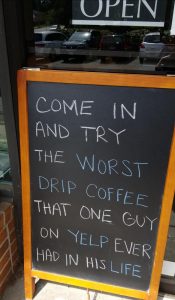
You’ve got the website, you’re listed on Google and Yelp, you’re building SEO, you’re updating content, you’re posting to social media, you have a referral program, you’re implementing digital marketing campaigns, but one day you see a one star review on Google in which a user is venting about their experience with your front desk and their bill. You put it on your list to talk about in the office meeting next week, brainstorming how to address it.
Two days later, you see a comment on social media from that same person railing on your business that you don’t even read your Google reviews because no one has addressed their concerns or contacted them. Your bad dirt just got worse, and the diSOAPointment is real. Then it “Dawn”s on you, BRANDSOAP just posted about this issue and it’s not too late! Okay, I’ll Dial back my SOAP puns…for now.
Let’s focus on the big issue here: customer service has changed, but that doesn’t mean it’s not important. Being on social media is an amazing, accessible way to connect with your audience, and for them to connect with you. This convenience comes with responsibility. If you have these channels open to connect, it’s a 2-way line and you need to be ready for the good, the bad, and the ugly to come back at you.
Facts first:
- 82% of consumers have left negative reviews or comments on a brand because of customer service
- At least 60% of the average brand audience will be influenced by negative comments
- 39% will decide against purchasing a product after reading 3 bad reviews
- Brands that address their social media customer service commentary have a yearly 7.5% financial boost
- 90% of buyers like to look through online reviews and the merchant’s page before deciding to buy
- 63% of customers around the world will become loyal to companies who communicate honestly online about themselves
Okay, back to your bad review. It stinks, it’s yet another thing you have to deal with in your already busy day, it may not even be true, or the details may be exaggerated, but you still have to address it because not responding will hurt you worse in the long run.
Steps to addressing your bad review:
- Respond.
- Use their name. This is a best business practice anyway, but it really helps to connect and personalize your response where your goal is continuing to connect through resolution. Most often you can find the name on the profile that was used to make the negative review, but if a human name isn’t listed or hidden it is appropriate to use their handle. “Dear @lilpinchofhealth, we’re sorry to hear about the inconvenience…”
- Be Quick. 42% of consumers expect an answer within 1 hour on social media according to new research led by Jay Baer. They asked 3000 Americans about their social media use, 690 said they used it to reach out directly to a brand, and their response surprises many. Depending on your staffing and scheduling, that turn-around may be near-impossible. Do your best, because ideal customer experience around the world says the faster the better. You can utilize services such as Text, Email, or Google Alerts to let you know when someone has left a new review. The pay-off here can be huge. When dissatisfied customers felt listened to and that their issues were resolved, 70% became loyal to the brand or updated the review.
- Best Policy. You guessed it, it hasn’t changed since the playground: honesty. If there are some things going on behind the scenes that may have caused a ball to be dropped, try to cite it without sounding like you are making excuses. “Dear Jeremy, this week hasn’t been easy for us during the power outages and limited communication, but we want to say we understand your frustration.” If you have been short staffed due to an employee family emergency or crazy traffic that’s shut down the road, you are allowed to say that. If someone misrepresented their price, explain why that may have happened and where the communication breakdown may have occurred. In a relationship disagreement, it feels better when the other party is honest and owns up to their mistake, you may gain their trust because of it. This extends then into transparency. In your response, use accepting language such as “we value our customer’s feedback” or “we hope to learn from this to make sure your experience gets even better.”
- Say sorry. It is human and humble. Plus, because this is social media, it is displayed to others on the platform in the future that you own your mistakes. This makes you seem more honest and transparent, and will continue to build trust with your customers.
- Don’t argue. It’s ugly and screams unprofessional. Even if the claim is not true, addressing the issue respectfully continues to build trust with this unhappy person AND other prospective customers who see that you address issues. If it’s fraudulent, give a polite comment addressing it then leave it alone. For real issues, aim to resolve in a way that would be satisfactory to both parties. Empathizing will go over better than arguing with your upset customer. “We can understand that would be inconvenient”. If the issue is sensitive and private, as is often the case in medicine, you can write publicly that you will send them a DM to gather the details and address their concerns in a way that protects their privacy.
In medicine, we know prevention is the best practice to avoid illness and injury. Let’s carry the “prevention is the best medicine” attitude into our marketing and see how we can best avoid bad reviews and their negative impact on your business.
How to prevent bad reviews and their negative impact:
- Have good reviews. They need to significantly outnumber your bad ones. This seems like a ‘duh’, but when you first start out you likely won’t have any bad. If you have a handful of positive reviews that’s a great start, but your average score will be easily tanked by one negative post. Aim to give yourself a buffer as you start out, aim for a lot with a strategy. There are a lot of good ways to get a lot of good reviews. There are also things NOT do such as asking customers to review you onsite because review sites are smart. They will see all the reviews come from the same IP address. Remember, it’s not enough to have the average score be positive, you need enough to protect yourself in the future with plenty of the positive.
- Respond to the bad. As we went over earlier, addressing bad reviews will help your reputation and presentation. This also increases the chance the upset reviewer will update and change their review to be more positive.
- Learn from the past. When you do get negative reviews, after responding and making sure the needs of that customer have been met, adjust your practices! Use it as a learning experience to avoid the same situation in the future. A wise monkey once told Simba, “the past can hurt, but the way I see it, you can either run from it or learn from it.”
- Say thank you. This can be on any channel that makes sense for you, and doesn’t need a special occasion to be expressed. It can be a post, liking customer posts, a personalized email, or a tag when customers have really supported you. People like feeling like they are included in part of the community you have created, and that feeling of inclusion translates. Saying thank you can increase overall business 17%. When people feel appreciated they are less likely to walk away with a negative experience. A little gratitude goes a long way!
- Go to the source. Ask your customers directly for their thoughts. When you or your staff interact with customers, ask them after the interaction if there was anything you could have done to improve their overall experience.
At the end of the day no one is perfect, and it’s normal to see some bad reviews about a business or product. It’s authentic and real. In fact, if the reviews are all perfect 95% call BS and think the reviews are fake or filtered. People like to see that you have responded to the bad and provided others with excellent customer service, because they know they will be taken care of if they encounter issues.
How have you dealt with your bad review situations and were you successful?
“10 Ways to Provide Outstanding Customer Service on Social Media.” Healthinomics, www.healthinomics.com/10-ways-to-provide-outstanding-customer-service-on-social-media/.
Baer, Jay. “42 Percent of Consumers Complaining in Social Media Expect 60 Minute Response Time.” Convince&Convert, www.convinceandconvert.com/social-media-research/42-percent-of-consumers-complaining-in-social-media-expect-60-minute-response-time/.
Entis, Laura. “Got a Bad Yelp Review? Here's How to Defend Your Business Online.” Entrepreneur, www.entrepreneur.com/article/238501.
“10 Online Reputation Management Tips for Your Business.” WOWbix, wowbixmarketing.com/10-online-reputation-management-tips/.
Shani, Talia. “What to Do About Negative Reviews.” Yotpo, www.yotpo.com/blog/how-to-harness-the-positive-power-of-negative-reviews/.
“Bad Online Review? Here’s How To Deal With Negative Reviews.” Reputation Stacker, reputationstacker.com/how-to-deal-with-bad-reviews/.
“The Dos and Don'ts of Dealing With Negative Online Reviews.” Fundera, www.fundera.com/blog/dealing-with-negative-online-reviews.
“Local Consumer Review Survey 2019.” Bright Local, www.brightlocal.com/research/local-consumer-review-survey/?SSAID=314743&SSCID=21k4_27cil.
Allers, Roger and Rob Minkoff, directors. The Lion King. Disney, 1994.